




Samsung Galaxy A21 vs Xiaomi Redmi K30
The Samsung Galaxy A21 and Xiaomi Redmi K30 are smartphones from different performance categories, but comparing their specifications shows clear differences in power, display quality, and battery capacity. While the Galaxy A21 is designed as a budget device for everyday use, the Redmi K30 offers stronger hardware and more advanced features.
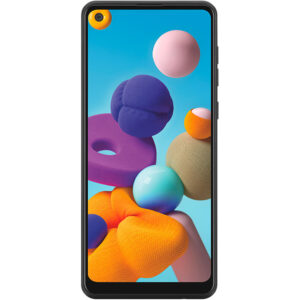
When it comes to the display, the Samsung Galaxy A21 features a 6.5-inch HD+ screen with a resolution of 720 × 1600 pixels. It provides decent viewing for everyday tasks such as browsing and watching videos, but it lacks higher resolution and fast refresh rate technology. In contrast, the Xiaomi Redmi K30 comes with a larger 6.67-inch Full HD+ display with a resolution of 1080 × 2400 pixels. The Redmi K30 also supports a 120 Hz refresh rate, which makes scrolling, gaming, and animations noticeably smoother compared to the standard 60 Hz display found on the Galaxy A21.
Performance is another area where the two devices differ significantly. The Samsung Galaxy A21 runs on the MediaTek Helio P35 processor, which is built for basic smartphone activities like social media, messaging, and light app usage. The Xiaomi Redmi K30, however, is powered by the Qualcomm Snapdragon 730G processor in the 4G version (and Snapdragon 765G in the 5G variant). This chipset is considerably more powerful and is designed for better multitasking and gaming performance.
RAM capacity also plays an important role in device performance. The Galaxy A21 typically comes with 3 GB of RAM, which is sufficient for simple tasks but can struggle with heavy multitasking. The Redmi K30 offers significantly higher memory options, including 6 GB and 8 GB RAM variants. This allows the device to handle multiple applications more efficiently and maintain smoother overall performance.
Battery capacity is slightly higher on the Xiaomi Redmi K30. The Galaxy A21 is equipped with a 4000 mAh battery, which provides reliable daily usage for moderate users. The Redmi K30, on the other hand, features a larger 4500 mAh battery along with faster charging support. This combination not only extends usage time but also reduces charging duration.
Overall, the Xiaomi Redmi K30 clearly delivers stronger specifications in terms of display quality, processor performance, RAM capacity, and battery size. While the Samsung Galaxy A21 remains a practical option for users who need a simple and affordable smartphone, the Redmi K30 is the better choice for those who want smoother performance, improved multitasking, and a more advanced display experience.
| Product Name |
Samsung Galaxy A21Xiaomi Redmi K30 |
| Product Image |
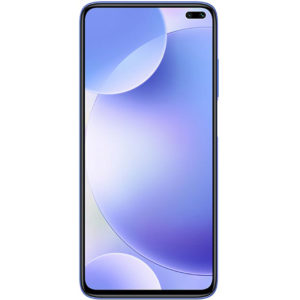
|
| Price | $124.99 $264.00 |
| Our Rating | |
| Brand | Samsung Xiaomi |
| Category | Mobiles Mobiles |
Main
  |
|
| 2G, 3G, 4G 2G, 3G, 4G | |
| Status | Released,, June, 2020, Available, Released,, December, 2019, Available, |
| Size | 6.5 inches, 102.0 cm2 (~79.3% screen-to-body ratio) 6.67 inches, 107.4 cm2 (~84.8% screen-to-body ratio) |
| Dimension | 167.8 x 76.7 x 8.1 mm (6.61 x 3.02 x 0.32 in) 165.3 x 76.6 x 8.8 mm (6.51 x 3.02 x 0.35 in) |
| Build | Glass front, plastic back, plastic frame Glass front (Gorilla Glass 5), glass back (Gorilla Glass 5), aluminum frame |
| Weight | 193 g (6.81 oz) 208 g (7.34 oz) |
| SIM | Single SIM (Nano-SIM) or Dual SIM (Nano-SIM, dual stand-by) Hybrid Dual SIM (Nano-SIM, dual stand-by) |
Display
|
|
| Type | Super AMOLED capacitive touchscreen, 16M colors IPS LCD capacitive touchscreen, 16M colors |
| Resolution | 720 x 1600 pixels, 20:9 ratio 1080 x 2400 pixels, 20:9 ratio |
| Pixel/Inch | (~270 ppi density) (~395 ppi density) |
| Protection | Corning Gorilla Glass 5 |
|
HDR10 120Hz refresh rate |
Memory
|
|
| RAM | 3GB RAM 6/8 GB |
| Internal |
32GB eMMC 5.1
64/128/256 GB UFS 2.1 64GB 6GB RAM, 128GB 6GB RAM, 128GB 8GB RAM, 256GB 8GB RAM |
| Card Slot | microSDXC (dedicated slot) microSDXC (uses shared SIM slot) |
Camera
|
|
| Main |
Quad: +16 MP, (wide), AF +8 MP, (ultrawide) +2 MP, (macro) +2 MP, (depth) LED flash, panorama, HDR Quad; + 64 MP, f/1.9, 26mm (wide), 1/1.72", 0.8µm, PDAF + 8 MP, f/2.2, 13mm (ultrawide), 1/4.0", 1.12µm + 2 MP, f/2.4, (macro), 1/5.0", 1.75µm + 2 MP, f/2.4, (depth) Dual-LED flash, HDR, panorama |
| Selfie |
13 MP, (wide) Dual: + 20 MP, f/2.2, 27mm (wide), 1/3.4", 0.8µm + 2 MP, f/2.4, 1/5", 1.75µm, depth sensor HDR |
| Video |
Main : 1080p@30fps Selfie : 1080p@30fps Main : 2160p@30fps, 1080p@30/120fps, 720p@960fps; gyro-EIS Selfie : 1080p@30fps |
Processor
|
|
| OS | Android 10.0; One UI 2.0 Android 10.0; MIUI 11 |
| Chipset | Qualcomm SDM730 Snapdragon 730G (8 nm) |
| CPU | Octa-core (2x2.2 GHz Kryo 470 Gold & 6x1.8 GHz Kryo 470 Silver) |
| GPU | Adreno 618 |
Battery
|
|
| Capacity | Non-removable Li-Po 4000 mAh battery Non-removable Li-Po 4500 mAh battery |
| Fast Charging | Fast charging 15W Fast charging 27W, 100% in 68 min (advertised) |
Sensors
|
|
| Fingerprint (rear-mounted), accelerometer, proximity, compass Fingerprint (side-mounted), accelerometer, gyro, proximity, compass |
Sound
|
|
| Loud Speaker | Yes Yes |
| HF Jack | Yes Yes |
| 24-bit/192kHz audio |
Connectivity
|
|
| WLAN | Wi-Fi 802.11 b/g/n, Wi-Fi Direct, hotspot Wi-Fi 802.11 a/b/g/n/ac, dual-band, Wi-Fi Direct, hotspot |
| Bluetooth | 5.0, A2DP, LE 5.0, A2DP, LE, aptX HD |
| GPS | Yes, with A-GPS, GLONASS, BDS Yes, with A-GPS, GLONASS, GALILEO, BDS |
| NFC | Yes (market/region dependent) Yes |
| Radio | FM radio FM radio, recording |
| USB | Yes 2.0, Type-C 1.0 reversible connector, USB On-The-Go |
| Infared-Port | Yes |
Extra Features
|
|
| Color | Black Blue, Red, Purple |
Network
|
|
| Technology | GSM / HSPA / LTE GSM / CDMA / HSPA / EVDO / LTE |
| 2G |
GSM 850 / 900 / 1800 / 1900 - SIM 1 & SIM 2 (dual-SIM only)
GSM 850 / 900 / 1800 / 1900 - SIM 1 & SIM 2 CDMA 800 & TD-SCDMA |
| 3G |
HSDPA 850 / 900 / 1900 / 2100 HSDPA 850 / 1700(AWS) / 1900 / 2100 HSDPA 850 / 900 / 2100 CDMA2000 1xEV-DO |
| 4G | LTE LTE band 1(2100), 3(1800), 5(850), 8(900), 34(2000), 38(2600), 39(1900), 40(2300), 41(2500) |
| Speed | HSPA 42.2/5.76 Mbps, LTE Cat4 150/50 Mbps HSPA 42.2/5.76 Mbps, LTE-A |